The Rolex Oyster Perpetual 100 Years Has a Problem
Rolex Oyster Perpetual 100

Rolex could have celebrated 100 years of the Oyster with something spectacular.

A platinum case would have been easy to justify. So would a gem-set dial, an elaborate caseback, or a high-priced commemorative model aimed squarely at established collectors.
Instead, Rolex chose the Oyster Perpetual.

That decision is more interesting than the small “100 years” inscription on the dial.

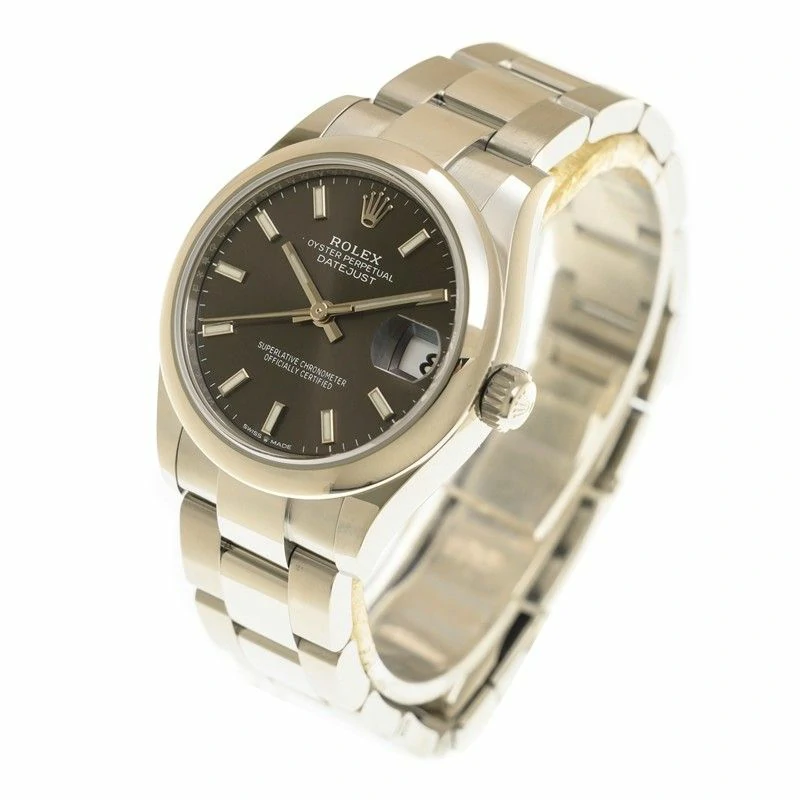
The 2026 Oyster Perpetual “100 Years” is fundamentally a simple automatic Rolex with three hands, an Oyster bracelet, 100 metres of water resistance, and no date or complication. Its anniversary treatment is restrained: a yellow-gold bezel and crown, a slate sunray dial, green details, a tiny commemorative inscription at 6 o’clock, and the number 100 on the winding crown.

It looks like a watch designed to be worn frequently.

The collector market may have other ideas.

That creates the contradiction at the center of this anniversary Rolex. If the Oyster Perpetual 100 Years becomes difficult to obtain and develops a substantial secondary-market premium, owners may become increasingly reluctant to use it in the uncomplicated way its design encourages.

For a watch celebrating one of Rolex’s most important practical inventions, that would be a strange outcome.

First, It Is the Oyster That Is 100 Years Old

The name of the watch creates an easy historical misunderstanding.

The Oyster Perpetual did not appear in 1926.

The Oyster did.

Hans Wilsdorf introduced the Rolex Oyster in 1926 as a completely waterproof and dustproof wristwatch. At a time when wristwatches remained vulnerable to moisture and contamination, protecting the movement inside a sealed case was not merely a design exercise. Reliability was central to the argument for wearing a watch on the wrist rather than carrying a protected pocket watch.

Rolex followed that achievement with another major development in 1931: the Perpetual rotor, its self-winding system.

The modern Oyster Perpetual combines those ideas with an earlier Rolex achievement in chronometric precision. Rolex therefore describes the model as bringing together three foundations of the company: precision, waterproofness, and automatic winding.

The 2026 anniversary celebrates the first of those milestones.

That distinction matters because the watch is not simply marking the birthday of a product line. It is commemorating the case architecture that eventually became the foundation for much of modern Rolex.
Rolex Chose Its Simplest Watch for a Complicated Anniversary

Look at the wider Oyster family and the decision becomes more deliberate.

The Oyster architecture eventually supported the Datejust, Explorer, Submariner, GMT-Master, Daytona, Sea-Dweller, Yacht-Master, and other watches that developed much stronger individual identities.

Rolex could therefore have attached the centenary to a more prestigious or technically elaborate model.

The Oyster Perpetual makes more historical sense.

Strip away the rotating bezels, chronographs, date displays, dual time zones, and professional associations that accumulated over the following century, and the essential Rolex proposition remains surprisingly simple: a precise automatic wristwatch protected from everyday life by a robust case.

The OP is the closest modern expression of that idea.

That makes the anniversary model less spectacular than it might have been, but arguably more coherent.

The Anniversary Details Are Almost Comically Small

Rolex did not redesign the Oyster Perpetual to make the anniversary obvious.

The slate dial carries the Rolex name and small minute-track squares in green. At 6 o’clock, “100 years” replaces the normal “Swiss Made” inscription. The yellow-gold winding crown carries a small 100 beneath the Rolex coronet.

There is no transparent caseback.

There is no large anniversary engraving.

There is no elaborate commemorative emblem occupying the dial.

From several feet away, most people would probably identify it simply as a two-tone Oyster Perpetual.

That restraint is significant because Rolex has historically been comfortable letting enthusiasts infer anniversary associations without printing them explicitly on the watch. The company has used green and unusual configurations to mark milestones before, while leaving the connection to collectors to understand.

For the Oyster centenary, Rolex finally wrote the occasion on the watch.

It just wrote it very quietly.

The Two-Tone Configuration Is More Interesting Than It First Appears

Calling the watch “two-tone” can create the wrong mental image.

This is not a Datejust with gold running through the center links of the bracelet. The Oyster bracelet remains Oystersteel. Yellow gold is concentrated on the domed bezel and winding crown, while gold-colored dial furniture brings warmth into the slate surface.

The result changes the visual balance of the watch without turning it into a conventional full-Rolesor design.

That matters because the Oyster Perpetual has historically depended on simplicity. Adding too much gold could have pushed the model toward Datejust territory, where combinations of precious metal, fluted bezels, Jubilee bracelets, and date displays already provide a more decorative Rolex experience.

Instead, the gold works almost like punctuation.

It is noticeable without becoming the entire sentence.

Whether someone likes that choice is another matter. Two-tone remains one of the most divisive Rolex aesthetics, and buyers who fundamentally dislike yellow gold are unlikely to be converted simply because the watch commemorates an anniversary.

Rarity does not fix personal taste.

The Slate Dial Does Much of the Work

The dial may be more important to the watch’s long-term appeal than the anniversary text.

Slate creates a neutral foundation between the warm yellow gold and Rolex green. In direct light, the sunray finish gives the dial considerably more variation than a flat grey surface would suggest, while under softer conditions the same watch becomes much more restrained.

This difference between photography and actual viewing is beginning to appear in owner discussion.

One recent buyer who encountered both the 36mm and 41mm versions in Munich described the watch as substantially more impressive in person and ultimately chose the 36mm. Other reactions to the release have similarly focused on how the green, grey, steel, and gold combination changes with lighting rather than presenting one fixed appearance.

Those reports remain individual experiences rather than objective proof that the watch “looks better in person,” but they highlight a useful limitation of judging the OP100 from press images.

Sunray dials are responsive surfaces.

A studio photograph freezes one lighting condition.

A wrist does not.

36mm and 41mm Are Not Merely Two Versions of the Same Decision

Rolex offers the anniversary watch in 31mm, 36mm, and 41mm.

For many male buyers, the practical argument will center on 36 versus 41.

Online discussion tends to turn this into a vote. One group treats 36mm as the historically correct Rolex proportion, while another prefers the greater presence of the 41mm case.

That framing is not particularly useful.

The better question is what role the watch will play.

The Oyster Perpetual has no external bezel, crown guards, chronograph pushers, or date magnifier to add visual complexity. A large portion of its appearance comes from the relationship between dial, bezel, case, and bracelet. Increasing the diameter therefore changes more than the number on the specification sheet; it changes how much visual space the dial occupies on the wrist.

A 36mm OP can disappear under a cuff and behave like a restrained everyday watch. The 41mm makes the same basic design more assertive.

Neither is automatically correct.

The important point is that someone accustomed to 40mm sports watches should not assume 36mm will feel inadequate, just as someone who likes traditional Rolex proportions should not choose 36mm solely because enthusiasts describe it as the “correct” size.

Try both.

The watch is simple enough that proportion becomes one of its main features.

Owner Discussions Show Why Wrist Photos Are Unreliable

Recent size discussions around the Oyster Perpetual repeatedly produce conflicting answers even when photographs are provided.

Some owners see the 36mm as more elegant and versatile. Others find the 41mm more natural on the same approximate wrist size. One buyer who initially assumed 41mm would be too large reported that it looked much less bulky in person than it did through a phone camera.

That observation is useful.

Close smartphone photographs can exaggerate watch size because the camera is positioned near the wrist, while lens choice and angle distort the relationship between case and arm. A mirror photograph taken from farther away often produces a more realistic impression of how a watch looks to other people.

The practical lesson is not that 36mm is better.

It is that Reddit cannot size your watch for you.

Use community photographs to understand possibilities, then make the final decision on your own wrist.

The 36mm Version Has a Strong Historical Argument Without Needing Nostalgia

There is still a reason the 36mm anniversary model feels especially coherent.

For much of Rolex history, dimensions around this range were entirely normal for men’s watches. The idea that a luxury watch needs a 40mm-plus case to have sufficient presence is comparatively recent.

The current shift toward smaller watches has made those older proportions easier for contemporary buyers to reconsider, but the OP36 does not need a fashion cycle to justify itself.

Its appeal comes from the architecture.

A simple three-hand watch benefits from compactness because there is relatively little information that requires dial space. The smaller case allows the bracelet and bezel to contribute more strongly to the overall composition instead of letting the dial dominate the wrist.

This is also why someone can happily wear a 40mm Submariner and prefer a 36mm Oyster Perpetual.

Diameter does not need to remain consistent across a collection.

Purpose and design matter.

Calibre 3230 Is Almost Too Easy to Ignore

The anniversary treatment naturally attracts attention, but underneath it Rolex uses the familiar calibre 3230.

That means approximately 70 hours of power reserve, automatic winding through the Perpetual rotor, and the modern Rolex movement architecture used in several no-date references.

There is no anniversary complication.

That is appropriate.
The original Oyster’s importance was not that it displayed more information. Its significance came from making the wristwatch more dependable as an object.

The OP100 follows the same philosophy. The movement is not there to provide mechanical theatre through a display back. It is there to wind automatically, keep time, and remain protected inside the Oyster case.

A century after waterproofness was revolutionary, reliability has become so normal that it is easy to overlook.

That may be the Oyster’s greatest success.

The Most Important Rolex Innovations Eventually Become Boring

This is where the centenary becomes more interesting than the commemorative watch itself.

Water resistance is expected today.

Automatic winding is expected.

A screw-down crown is familiar.

A sealed sapphire-crystal watch that can survive swimming without special preparation does not sound radical.

In 1926, the problem looked very different.

Dust, humidity, and water could reach a wristwatch movement much more easily, threatening accuracy and reliability. The Oyster case helped turn environmental protection into something a wristwatch owner could take for granted.

Rolex then became exceptionally good at demonstrating the idea. Mercedes Gleitze’s 1927 English Channel swim became part of the company’s early public proof of waterproofness, while later Rolex advertising and sporting associations repeatedly connected watches with real environments rather than treating them solely as jewellery.

The technology succeeded so thoroughly that its original problem has largely disappeared from the modern buyer’s mind.

We notice the dial color.

We debate 36mm versus 41mm.

We discuss allocation.

We speculate about resale value.

Few buyers stand at an authorized dealer wondering whether dust will destroy the movement.

That is what 100 years of progress looks like.

The Anniversary Creates an Allocation Problem

Rolex describes the OP100 as a special edition, but the more practical question for buyers is availability.

The watch may have an official retail price, yet that does not mean every interested customer can buy one immediately.

Recent owner reports already show very different experiences.

One buyer reported seeing both 36mm and 41mm exhibition examples before receiving a 36mm allocation surprisingly quickly after expressing interest. Another Oyster Perpetual buyer described waiting far longer for a regular OP36, while others report being warned that anniversary availability could be difficult.

These anecdotes are useful precisely because they conflict.

They tell us that there is no reliable universal waiting period.

Allocation depends on dealer inventory, location, configuration, customer history, timing, and factors outsiders cannot observe.

Anyone claiming that the OP100 is either “easy to get” or “impossible to get” based on one boutique experience is generalizing too far.

Scarcity Is Not the Same Thing as Collectibility

The anniversary wording almost guarantees speculation.

There is a dateable event.

There are unusual design details.

The configuration is distinct from a standard steel Oyster Perpetual.

And buyers do not know exactly how long Rolex will produce it or how many examples will ultimately reach the market.

Those ingredients can produce scarcity.

They do not guarantee long-term collectibility.

Collectors eventually care about more than initial difficulty.

Design matters.

Historical relevance matters.

Condition matters.

Production duration matters.

How the watch fits into Rolex history matters.

Most importantly, future collectors have to continue wanting it after the launch excitement disappears.

A difficult allocation in 2026 tells us something about supply and demand in 2026.

It does not tell us what collectors will think in 2046.

The “Rare Rolex” Problem Can Make a Good Watch Worse to Own

The Time+Tide owner’s experience exposes a contradiction that deserves more attention than the secondary-market speculation.

The Oyster Perpetual is arguably one of the easiest Rolex watches to use as a daily companion. It has no complicated functions to set, no precious-metal bracelet to baby, no rotating bezel, and no elaborate finishing that demands ceremonial treatment.

Yet the owner admitted that the perceived specialness of the anniversary model was already making him more selective about when he wore it.

That is understandable.

It is also slightly unfortunate.

The more a buyer thinks of the OP100 as a future collectible, the more scratches become financial events. A bracelet mark is no longer simply evidence that the watch was worn. It becomes possible lost resale value.

The watch starts spending more time in a box.

At some point, the collector can become the custodian of an asset rather than the owner of a wristwatch.

Buying It for the Anniversary and Buying It for Yourself Are Different Decisions

The OP100 gives buyers several legitimate reasons to want it.

Someone may care deeply about Rolex history.

Someone may have a personal milestone in 2026.

Another buyer may simply love slate, green, and yellow gold.

A collector may want an unusual Oyster Perpetual configuration.

Someone else may see the anniversary inscription and immediately start thinking about future value.

Only the last motivation requires special caution.

A watch can be historically significant without becoming a great financial asset.

It can become collectible without being especially liquid.

It can command a secondary-market premium and later lose it.

It can also become extremely valuable while spending decades being a watch you never particularly enjoyed wearing.

The strongest reason to buy the OP100 is therefore the least exciting one: you would still want the watch if nobody expected it to appreciate.

The Gold Bezel Will Eventually Tell the Truth

There is another practical issue that rarely appears in launch coverage.

Gold is softer than steel.

The polished yellow-gold bezel and crown that distinguish the OP100 will accumulate wear differently from the Oystersteel case and bracelet. Fine scratches and small marks are inevitable if the watch becomes a genuine daily wearer.

For some owners, that will improve it.

The anniversary Rolex will gradually stop looking like the example photographed at Watches and Wonders and start looking like their watch.

For collectors trying to preserve maximum condition, the same process will be unwelcome.

That creates an ownership choice from the beginning.

Wear it normally and accept that the most visually distinctive metal on the watch will record use, or preserve it carefully because future collectors may care about condition.

There is no technical solution to that conflict.

It is a collecting decision.
The Oyster Bracelet May Be the Most Important Everyday Feature

The anniversary markings will dominate discussion, but they do little for daily comfort.

The bracelet does.

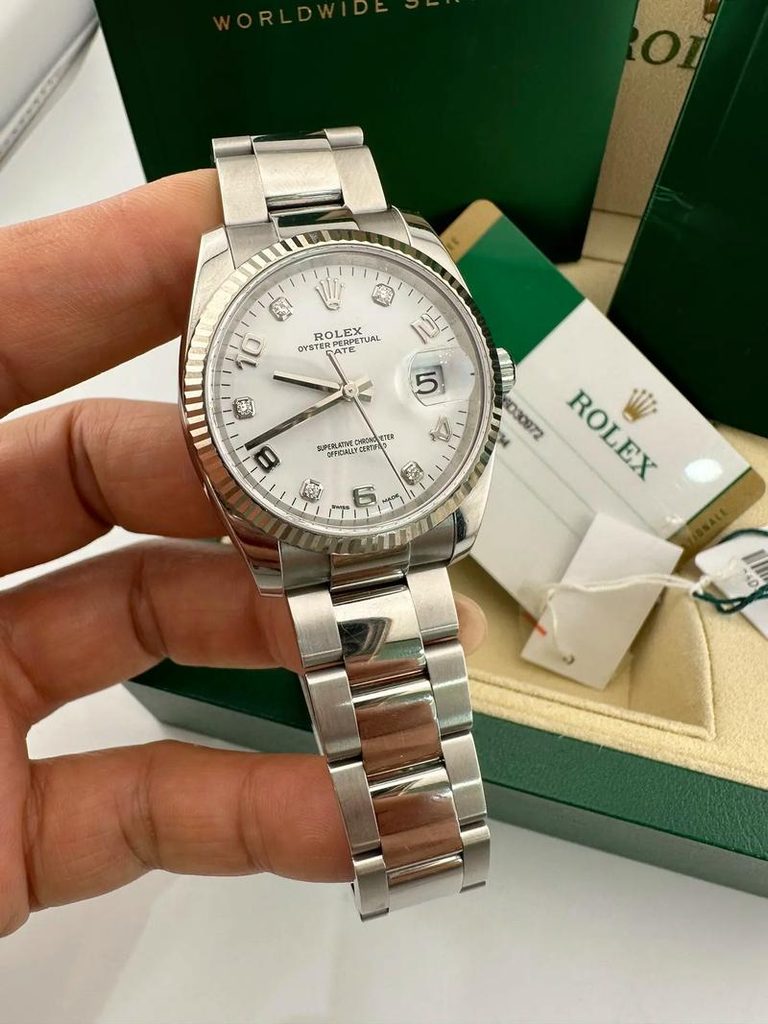
The OP uses the three-piece Oyster bracelet, keeping the overall watch visually simpler than a Jubilee-equipped Datejust. On the anniversary model, leaving the bracelet in steel also prevents the yellow gold from becoming too dominant.

More importantly, the bracelet helps explain why an Oyster Perpetual can work as an everyday watch despite its luxury positioning.

The case and bracelet form a relatively uncomplicated package without the visual weight of a professional bezel or the dressier texture of a Jubilee bracelet.

This is one of those details that rarely produces an exciting headline but affects every hour the watch spends on the wrist.

A commemorative inscription may influence why someone buys the watch.

Bracelet comfort influences whether they keep wearing it.

It Is Worth Asking What You Would Buy Without the Words “100 Years”

There is a simple test for anyone considering the watch.

Imagine the same slate dial, green accents, steel Oyster bracelet, yellow-gold bezel, and yellow-gold crown, but remove the “100 years” text and the 100 on the crown.

Would you still want it?

If the answer is yes, the anniversary becomes a meaningful bonus.

If the answer is no, it is worth understanding what exactly is driving the purchase.

Perhaps historical significance genuinely matters to you. There is nothing wrong with that. Collecting is full of objects whose meaning comes from context rather than pure design.

But if the answer is simply that the watch might be rare, the decision has shifted from watch collecting toward speculation.

That deserves a different level of caution.

The OP100 Makes More Sense When You Stop Treating It as a Trophy

The Oyster Perpetual 100 Years is not Rolex’s most technically complicated watch of 2026, nor is it the most visually dramatic.

That may be exactly why it works.

The original Oyster mattered because it helped make the wristwatch more practical. The Perpetual rotor later made automatic winding part of that same pursuit of convenience. Over time, those technologies became so deeply integrated into Rolex that contemporary owners barely think about them.

A simple three-hand Oyster Perpetual is therefore an unusually appropriate place to commemorate the anniversary.

The irony is that modern Rolex collecting can push the watch in the opposite direction.

Scarcity encourages preservation.

Premiums encourage caution.

Anniversary status encourages owners to think about future collectors.

A watch built around the idea of dependable everyday use can slowly become something people are afraid to scratch.

There is no need to resolve that contradiction for every owner. Some buyers will preserve the OP100 carefully, others will wear it constantly, and both choices can make sense.

But anyone considering the watch should decide which kind of owner they want to be before worrying about what the secondary market thinks.

A hundred years ago, the Oyster helped make the wristwatch easier to live with.

Read More »
Where Is the Cheapest Place to Buy a Rolex?

Cheapest Rolex

Buying a Rolex has never been as simple as walking into a boutique and choosing the model you want. For many of the brand’s most desirable watches, availability is often a greater challenge than price. Waiting lists, limited production, regional pricing, currency fluctuations and import taxes all influence what you’ll ultimately pay.

That raises a common question: where is the cheapest place to buy a Rolex?

The answer is more complicated than naming a single country. A Rolex that appears cheaper overseas may become more expensive once exchange rates, taxes and customs duties are taken into account. Likewise, a destination known for attractive pricing may offer little value if the watch you want is unavailable.

For most buyers, the goal should not be finding the lowest advertised price. It should be securing a genuine Rolex at a fair market value from a trusted seller. The best buying destination depends on whether you’re shopping for a brand-new watch from an authorised dealer or exploring the pre-owned market, where pricing and availability can differ dramatically.

What Determines the Price of a Rolex?

Rolex maintains relatively consistent pricing worldwide, but several factors create noticeable differences between markets.

Local Taxes
Taxes often have a greater impact on the final purchase price than the watch itself. In many European countries, international visitors may be eligible for a VAT refund, reducing the effective purchase price if the retailer participates in the refund scheme and all eligibility requirements are met.

However, that does not automatically translate into savings. Buyers returning home may still need to declare the watch and pay local import duties or taxes, which can offset part or all of the refund. Calculating the total landed cost before purchasing is essential.

Exchange Rates
Currency movements regularly create temporary pricing opportunities.

A stronger home currency can make overseas purchases significantly more attractive, while an unfavourable exchange rate can erase any apparent discount. Because exchange rates change continually, the cheapest country one year may not offer the best value the next.

Market Demand
Demand also influences pricing, particularly in the pre-owned market.

Highly sought-after models such as the Submariner, GMT-Master II and Daytona often command premiums regardless of where they are sold. Conversely, less in-demand references may be available below retail in certain markets.

Availability is just as important as price. A retailer offering the manufacturer’s suggested retail price provides little advantage if the waiting list stretches for several years.

Buying a Rolex in Europe
For buyers outside the European Union, cities such as Paris, Milan, Madrid and Athens can present attractive opportunities, particularly when VAT refunds are available.

Combining a holiday with a luxury purchase can sometimes reduce the overall cost compared with buying domestically, especially during periods of favourable exchange rates. Europe also offers a well-established network of authorised Rolex retailers alongside respected independent dealers specialising in certified pre-owned watches.

That said, overseas purchases should never be evaluated on sticker price alone. Import duties, VAT payable on arrival, customs declarations and foreign transaction fees may significantly reduce any apparent savings.

For UK buyers in particular, changes following Brexit have altered the economics of luxury shopping abroad. While overseas purchases can still represent good value in certain situations, the financial advantage is no longer as straightforward as it once was.

Why Japan Has Become a Favourite Among Rolex Collectors
When experienced collectors discuss the best place to buy a pre-owned Rolex, Japan almost always enters the conversation.

The country’s reputation rests on more than favourable exchange rates. Japanese watch dealers have earned international trust through conservative condition grading, meticulous documentation and a strong culture of preserving luxury goods. Many pre-owned Rolex watches appear remarkably well maintained despite years of ownership.

Tokyo, particularly the Ginza district, and Osaka are home to some of the world’s largest concentrations of luxury watch retailers. Buyers can compare hundreds—sometimes thousands—of Rolex models in a single day, ranging from current-production sports watches to rare vintage references.

Selection is arguably Japan’s greatest advantage. Instead of settling for whichever model happens to be available locally, collectors can compare different production years, dial variations, bracelet configurations and overall condition before making a decision.

Depending on exchange rates and prevailing market conditions, pre-owned prices may also compare favourably with those in the UK, Europe and North America. However, these opportunities fluctuate with currency movements, and buyers should factor in shipping, insurance and any applicable import charges if purchasing internationally.

It is important to note that Japan’s strength lies primarily in its pre-owned market. Obtaining a highly sought-after new Rolex from an authorised dealer remains just as challenging as it is in most other countries.

Is Hong Kong Still a Good Place to Buy a Rolex?
For decades, Hong Kong was regarded as one of the world’s premier destinations for luxury watch shopping. With no sales tax, a dense concentration of authorised dealers and independent specialists, and one of the most active secondary watch markets anywhere, it attracted collectors from across Asia and beyond.

While the city remains an excellent place to shop, the reasons have changed.

Rolex has gradually reduced regional price differences through more consistent international pricing, making dramatic bargains less common than they once were. Currency movements also play a larger role today than tax policy alone, meaning Hong Kong is no longer automatically the lowest-cost option.

Where the city continues to stand out is its exceptional inventory.

Buyers can browse everything from recently discontinued references to unworn current-production models and vintage collector pieces, often within a few streets. The concentration of specialist retailers also makes comparison shopping far easier than in many other markets, encouraging competitive pricing and, in some cases, room for negotiation—particularly on pre-owned watches.

For collectors searching for a specific reference rather than simply the lowest price, Hong Kong remains one of the strongest markets in the world.

Should You Buy New or Pre-Owned?
The answer depends less on budget than on availability and priorities.

Buying through an authorised Rolex dealer offers complete peace of mind. Every watch is guaranteed authentic, comes with the manufacturer’s warranty and includes its original documentation. The trade-off is that many of replica Rolex’s most desirable models are difficult to obtain, with demand consistently exceeding supply.

The pre-owned market offers a very different experience.

Rather than waiting months—or even years—for an allocation, buyers can often purchase the exact reference they want immediately. They also gain access to discontinued models, vintage pieces and earlier generations that are no longer available through authorised retailers.

The downside is that prices vary considerably. Condition, service history, originality, accompanying paperwork and market demand all influence value. A well-preserved example with its original box and papers will typically command a premium over an otherwise identical watch without documented provenance.

Regardless of where you buy, authenticity should never be assumed. Purchasing from established dealers with transparent inspection standards, detailed condition reports and clear return policies significantly reduces risk.

Hidden Costs That Can Eliminate Overseas Savings
A lower advertised price does not always translate into a lower overall cost.

Before purchasing a Rolex abroad, buyers should calculate every expense associated with bringing the watch home.

These may include:
Import duties and local taxes payable upon arrival.
Currency conversion charges imposed by banks or credit card providers.
International shipping and insurance if the watch is not carried personally.
Customs brokerage or administrative fees where applicable.
Future servicing costs if documentation or warranty coverage is incomplete.

These additional expenses can quickly narrow—or even eliminate—the apparent price difference between countries.

For this reason, experienced collectors compare the total ownership cost rather than focusing solely on the purchase price.

So, Where Is the Cheapest Place to Buy a Rolex?
There is no universal answer because the best destination depends on the type of Rolex you want and how you intend to buy it.

For buyers seeking a new watch at retail price, European countries may offer attractive opportunities for eligible international visitors when exchange rates and VAT refunds work in their favour. However, any potential savings should always be weighed against import taxes and customs obligations upon returning home.

For those considering a pre-owned Rolex, Japan consistently ranks among the strongest options thanks to its extensive inventory, rigorous standards for condition and authenticity, and, at times, favourable exchange rates.

Hong Kong also remains one of the world’s leading markets for selection, particularly for buyers looking to compare multiple dealers or source a hard-to-find reference.

Ultimately, the “cheapest” Rolex is not necessarily the one with the lowest price tag. A watch with documented provenance, verified authenticity and excellent condition often represents better long-term value than a seemingly cheaper alternative with an uncertain history.

The Bottom Line
Finding the best value in a Rolex requires more than comparing prices across countries. Taxes, exchange rates, availability and dealer reputation all influence the true cost of ownership.

Rather than chasing the lowest advertised figure, focus on purchasing from a reputable seller, verifying the watch’s authenticity and understanding every cost involved before completing the transaction.

Read More »
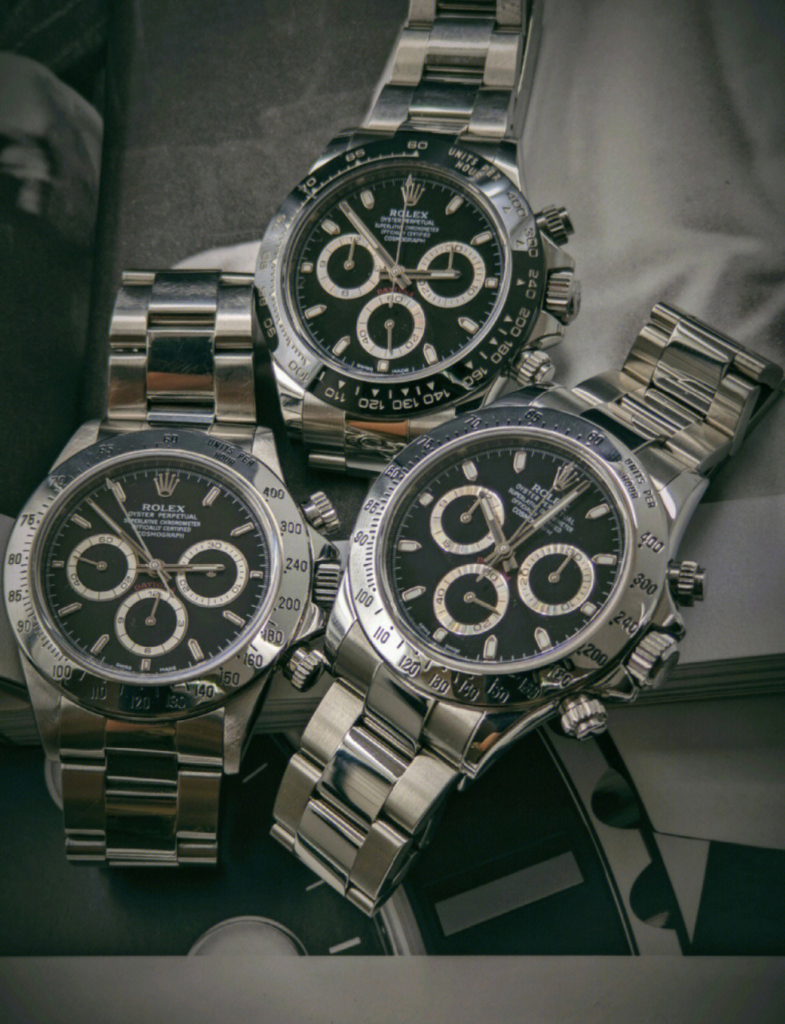
Rolex Quietly Restless Anniversary Collection

Cosmograph Daytona

Rolex didn’t need to say much with its teaser this year. A single line – a century of innovation – was enough to set the tone. It points back to 1926, when the brand introduced the Oyster case, a waterproof construction that, in hindsight, feels less like a product launch and more like a reset for the entire idea of the wristwatch.

That anniversary framing runs through everything Rolex showed at Watches Market Geneva this year. But what stands out is how uneven the “celebration” actually feels. Some pieces lean into heritage. Others push into material and mechanical territory Rolex has historically been reluctant to explore.

Daytona with grand feu enamel
The new Cosmograph Daytona (ref. 126502) is perhaps the clearest example of that tension.

At first glance, it reads like a familiar Daytona – until the dial reveals itself. Rolex introduces a white grand feu enamel surface, a material more often associated with small ateliers than industrial watchmaking. That alone feels unusual for a brand built on repeatability and control.

The execution is even more layered than it appears. The enamel is fired on a ceramic base before being transferred onto a brass disc, and the dial is composed of multiple segmented pieces for the main display and subdials. It is meticulous work, but also deliberately constrained – Rolex does not abandon process control; it re-engineers it.

What makes this replica watch more intriguing, though, is what surrounds the dial. A steel case paired with a platinum bezel and caseback is not a familiar Daytona configuration. The tachymeter scale also changes, with upright numerals replacing the inverted layout at six o’clock.

It is still recognisably a Daytona. But it is not behaving like one.

Notably, this reference is not part of the regular catalogue. It sits in that quieter, lower-production tier Rolex tends to use for experimental expressions – visible, but not fully “mainline.”

Day-Date 40 in Jubilee Gold
The second “Exceptional Watch” this year is the Day-Date 40 (ref. 228235), and here the experimentation is more tonal than technical.

Rolex introduces a new alloy called Jubilee Gold, described by the brand as a blend of “tender yellow, warm grey and soft pink.” In practice, what you see is a muted gold that sits somewhere between traditional yellow and rose, but avoids the sharper saturation both tend to carry.

This shift is not happening in isolation. Across the industry, precious metal watches have been moving toward softer visual profiles – less declarative, more atmospheric. Rolex’s answer is not to imitate others, but to refine its own material language.

The watch pairs this alloy with a green aventurine dial, using natural stone rather than glass-based substitutes. The surface has a quiet depth, broken up by fine mineral inclusions. Diamond hour markers complete the composition, keeping the Day-Date firmly in its formal register.

Like the Daytona, this is also an off-catalogue piece. Rolex seems comfortable keeping its most experimental work just outside the everyday lineup.

Yacht-Master II returns
The Yacht-Master II (ref. 126680) returns after its discontinuation in 2024, and it is arguably the most structurally changed watch in the collection.

The dial is more restrained than before. Hour markers are softer, more rounded, and the overall layout feels closer to Rolex’s current design language rather than the sharper, almost technical aesthetic of earlier versions.

Inside, the updated Calibre 4162 incorporates the Chronergy escapement, aligning it with Rolex’s modern movement architecture.

But the real shift is mechanical philosophy. The Ring Command bezel system is gone. In its place, Rolex has moved all programming functions to the pushers, describing the change as a move toward greater clarity and usability. The brand has also filed a patent for the revised mechanism.

It is hard not to read this as a quiet admission: complexity is only useful when it remains intuitive. Otherwise, it becomes theatre.

Oyster Perpetual “Jubilee” dial
The Oyster Perpetual line continues to be Rolex’s testing ground for dial creativity, and this year’s Jubilee dial is one of the more expressive examples.

The design revives a motif that traces back to the 1970s Datejust, but here it is reinterpreted through layered lacquer rather than print or enamel. The result is unexpectedly vivid, with overlapping colour blocks forming a structured, almost rhythmic surface.

Each colour is applied separately in successive layers, which gives the dial a slightly irregular depth when viewed up close. It is still controlled – this is Rolex – but it carries more visual energy than the line typically allows.

There is also a small but telling omission: the design is not available on the smallest sizes, which suggests Rolex is treating it as a more contemporary visual statement than a universal aesthetic.

Two-tone and solid gold Oyster Perpetual
The return of two-tone Oyster Perpetual models feels deliberately tied to the centenary theme. It is not just an aesthetic revival; it is a reference back to early Oyster construction.

One of the more unusual details is textual. “Swiss Made” is replaced with “100 years” at six o’clock, while the winding crown is engraved with a “100” marking. Rolex does not often make its messaging this explicit, which makes the gesture feel unusually direct.

Solid gold versions extend the idea further. The most interesting executions combine lacquer dials with natural stone hour markers, including combinations not previously seen in the Oyster Perpetual line. A blue lacquer dial with stone markers on the 34 mm version in Everose gold stands out in particular, not because it is loud, but because it is structurally new for the collection.

Datejust green ombré
The new green Datejust 41 and 36 introduce a gradient dial that is more process-driven than decorative.

The surface begins as green lacquer, then receives a secondary black lacquer spray applied in a radial motion toward the edges. The result is a controlled fade rather than a purely optical gradient.

It is subtle, but the execution matters more than the appearance. Rolex rarely uses gradient effects in ways that feel purely aesthetic; here, the technique itself becomes the point.

A centenary that avoids spectacle
At Watches Market Geneva, Rolex also reiterated its updated Superlative Chronometer criteria – now emphasizing magnetism resistance, reliability, and sustainability as part of the design and manufacturing process rather than post-production testing alone.

There is a marketing angle to all of this, of course. But the more interesting detail is how restrained the overall collection feels.

Even external commentary reflects that tone. As Paul Altieri noted in remarks to industry press, “Rolex played it conservative this year,” pointing to the Jubilee dial as one of the few genuinely unexpected elements.

That observation feels broadly accurate. The Jubilee motif on the Oyster Perpetual 36mm is probably the most visually playful object in the lineup, and even that is tightly engineered rather than expressive in a loose sense.

If there is a unifying idea across this centenary release. Rolex seems more interested in controlled variation – small shifts in material, dial construction, and mechanical usability that accumulate quietly rather than announce themselves loudly.

Read More »
Rolex’s Most Unexpected Daytona in Years – And Why It May Matter More Than It Looks

Rolex history

A new Daytona rarely arrives quietly. Even so, few people expected something quite like this.

An off-catalogue stainless steel Daytona fitted with a grand feu enamel dial wasn’t on anyone’s prediction list. Three years after the Daytona celebrated its 60th anniversary, Rolex has unveiled what feels less like a standalone surprise and more like another chapter in an ongoing tribute to its most famous chronograph.

And that’s precisely what makes it fascinating.

At a fair filled with predictable updates and cautious refinements, this watch immediately became one of the most discussed releases. Some collectors were talking about it before they had even seen it in person. For a company that generally prefers gradual evolution over dramatic gestures, that’s saying something.

There’s also a broader context worth considering. The year 2026 marks the centenary of the Oyster case, one of the most important developments in Rolex history. The brand has framed the anniversary as a celebration of a century of innovation, and this Daytona feels very much connected to that narrative.

At first glance, it may appear to be another limited-production curiosity designed for the brand’s most loyal clients. Look a little closer, however, and the watch starts to reveal something else. New manufacturing techniques, new materials, and a willingness to experiment in areas where Rolex has traditionally been conservative all suggest that this release is about more than exclusivity.

In some respects, it feels like a glimpse into the future disguised as a tribute to the past.

Rolex and the Return of Traditional Craft

One of Rolex’s greatest strengths has always been consistency.

Producing more than a million watches annually while maintaining remarkably tight quality standards is no small achievement. Over the past two decades, much of the company’s development effort has focused on improving reliability, repeatability, and long-term durability. That philosophy explains why Rolex has gradually moved away from certain materials and production methods that are difficult to control at scale.

Leather straps provide a good example. Older Day-Date references were once available on leather, but today the collection is almost exclusively paired with precious-metal bracelets. From a manufacturing perspective, the decision makes perfect sense. Metal is easier to standardize, easier to service, and generally more predictable over decades of use.

Yet something interesting has happened in recent years.

Rather than moving further toward industrial uniformity, Rolex has started reintroducing elements that involve a greater degree of craftsmanship. The platinum Perpetual 1908 launched in 2024 featured an intricate guilloché dial. Before that came the champlevé enamel Day-Date “Emotion,” a watch that surprised many observers simply because it incorporated a decorative technique long associated with smaller artisanal brands rather than industrial giants.

At first these releases looked like isolated experiments.

Now they appear to form part of a larger strategy.

The company seems increasingly interested in adapting traditional crafts to modern production rather than abandoning them altogether. That’s a subtle but important distinction. Rolex is not trying to become a niche métiers d’art manufacturer. Instead, it appears to be exploring how centuries-old decorative techniques can be made compatible with twenty-first century manufacturing standards.

The patent activity surrounding enamel production offers a fascinating glimpse into that effort.

In 2023, replica Rolex filed a patent related to enamel dial construction. The challenge being addressed was surprisingly practical. Traditional drilling methods can generate enough heat to crack enamel when holes are created for applied markers. To solve the problem, Rolex describes the use of a femtosecond laser capable of cutting through both enamel and the underlying metal while generating minimal thermal stress.

On paper, that sounds like a highly technical manufacturing detail.

In reality, it’s exactly the sort of innovation that determines whether a traditional craft remains a boutique specialty or becomes something that can be reproduced consistently on a larger scale.

Read More »
What Coveted watches Did Rolex Quietly Retire in 2026?

Coveted watches

Rolex’s annual model updates are more than a mere product launch; they are a seismic event that reshapes the landscape of luxury. The year 2026 proved no different, marking a poignant farewell to several beloved references. For collectors and enthusiasts, this discontinuation transforms these watches from mere accessories into frozen moments of the brand’s history, instantly elevating their status and desirability.

The most significant shift came with the retirement of a modern classic: the Oyster Perpetual 41 (Reference 124300). This watch, celebrated for its pure, unadorned dial and accessible price point, represented the very essence of the Rolex ethos – peerless reliability and timeless design. Its departure, however, is not an end, but an evolution. Rolex has introduced its successor, the Reference 134300. While the iconic Oyster case remains, subtle refinements are expected in the sunburst finish of the dial and the precision of the movement, making the outgoing 124300 the final iteration of a beloved generation. For those who cherish the classic proportions and the uncluttered aesthetic, the now-discontinued model is a perfect opportunity to acquire a piece of recent history.

In a move that surprised many, Rolex also drew the curtain on a specific configuration of one of its most prestigious lines: the Day-Date 36 models featuring both a fluted bezel and a diamond-set bracelet. The Day-Date, or “President,” has long been the ultimate symbol of achievement. The combination of the signature fluted bezel – meticulously crafted from a solid block of precious metal to catch the light – with the glorious shimmer of a fully diamond-paved bracelet was the pinnacle of opulence. Its discontinuation pares back the most extravagant options, making existing examples rarer and potentially more sought-after by those seeking the fullest expression of Rolex grandeur.

Beyond these headline changes, Rolex replica also pruned its catalog of several enchanting artistic dials. The Datejust 31 with its delicate floral motif dials has been retired. These watches offered a touch of poetic, garden-inspired romance, with finely engraved and lacquered petals creating a stunning, three-dimensional texture on the wrist. Similarly, all variations of the vibrant and playful Oyster Perpetual “Celebration” dial have been discontinued. Known for its joyful splash of colorful bubbles in lacquer against a vibrant base, this dial brought a unique, youthful energy to the collection. Its removal signals a return to the more classic, monochromatic dials for which Rolex is best known, instantly cementing the “Celebration” as a joyful, and now collectible, anomaly.

Do any of these discontinued 2026 Rolex models speak to you? Perhaps you’ve always admired the understated elegance of the Oyster Perpetual 41 or dreamed of the ultimate luxury embodied by the diamond-set replica Day-Date. Now is the moment to act before these watches slip further into the realm of legend. Contact us today to check the availability of these recently discontinued Rolex watches and secure your piece of horological history before it’s gone for good.

Read More »
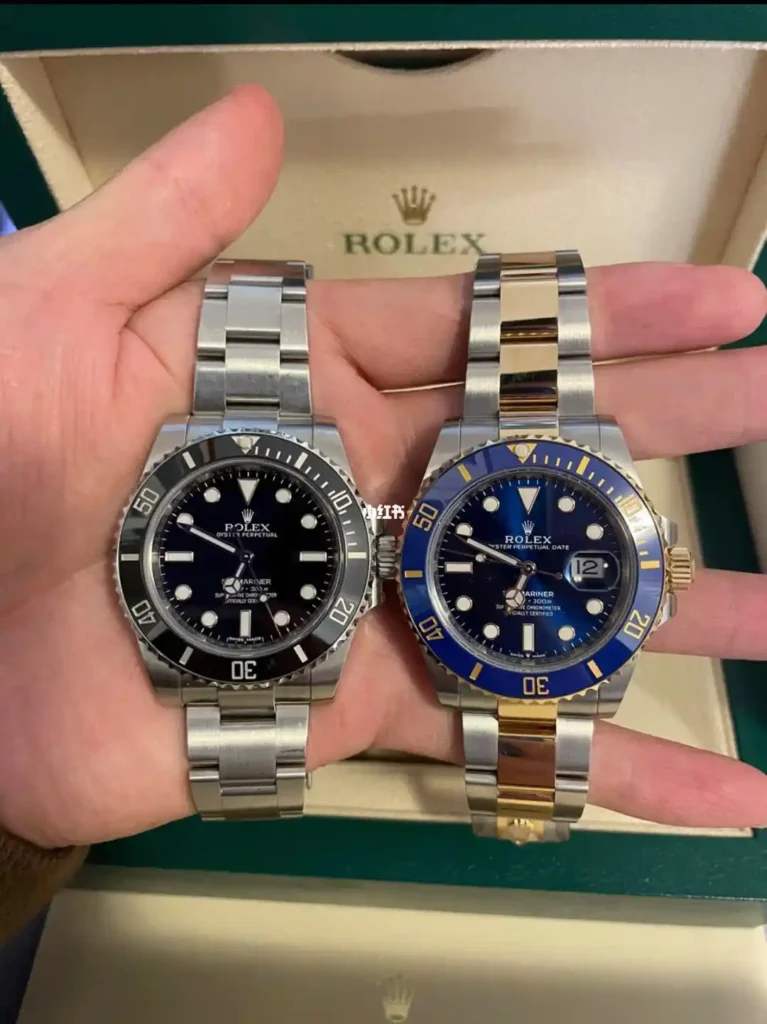
Why the Replica Rolex Sky-Dweller Holds Long-Term Value

Sky-Dweller

A primary pillar of the Sky-Dweller’s value is its controlled availability. Rolex deliberately produces it in smaller numbers compared to staple models like the Submariner or Datejust. This is amplified by its positioning as Rolex’s most complicated and technically sophisticated model, inherently limiting its production capacity. Furthermore, it has historically been offered primarily in precious metals, cementing its high-end status and creating a natural barrier to entry. This deliberate scarcity ensures demand consistently outpaces supply, forming a solid foundation for value retention.

Beyond scarcity, the Sky-Dweller‘s intrinsic value lies in its groundbreaking mechanics. It is not merely a watch; it is the pinnacle of Rolex’s in-house horology, featuring the ingenious calibre 9001. This movement masterfully combines two highly useful complications: an annual calendar (“Sky-Dweller” indeed for its month display) that only requires correction once a year, and a dual time zone function with a distinctive 24-hour disc. Uniquely, both the month and local time zone are set via Rolex’s patented Ring Command bezel, a seamless interface that reinforces its tool-less, user-friendly elegance. This concentration of patented technology in a single, robust package makes it a standout even among its peers.

The theory of its value is proven daily in the global marketplace. Specific configurations command exceptional attention and premiums. The replica Rolex Oystersteel and yellow Rolesor (two-tone) model with a blue dial has become a modern icon, often trading significantly above its retail price. The appetite isn’t limited to new pieces; well-preserved pre-owned Sky-Dwellers, especially in sought-after metal and dial combinations, demonstrate remarkable price stability and gradual appreciation. This robust activity across both new and secondary markets signals deep, sustained confidence from collectors and investors alike.

https://www.replicaimitation.com

Entering 2026, the Sky-Dweller‘s value proposition remains as relevant as ever. In a market that increasingly prizes both technical merit and distinctive design, it checks every box. It offers the utility of a true traveler’s watch, the sophistication of an annual calendar, and the unmistakable presence of a Rolex. Unlike more ubiquitous sports models, it carries an air of exclusivity and intellectual appreciation.

Read More »
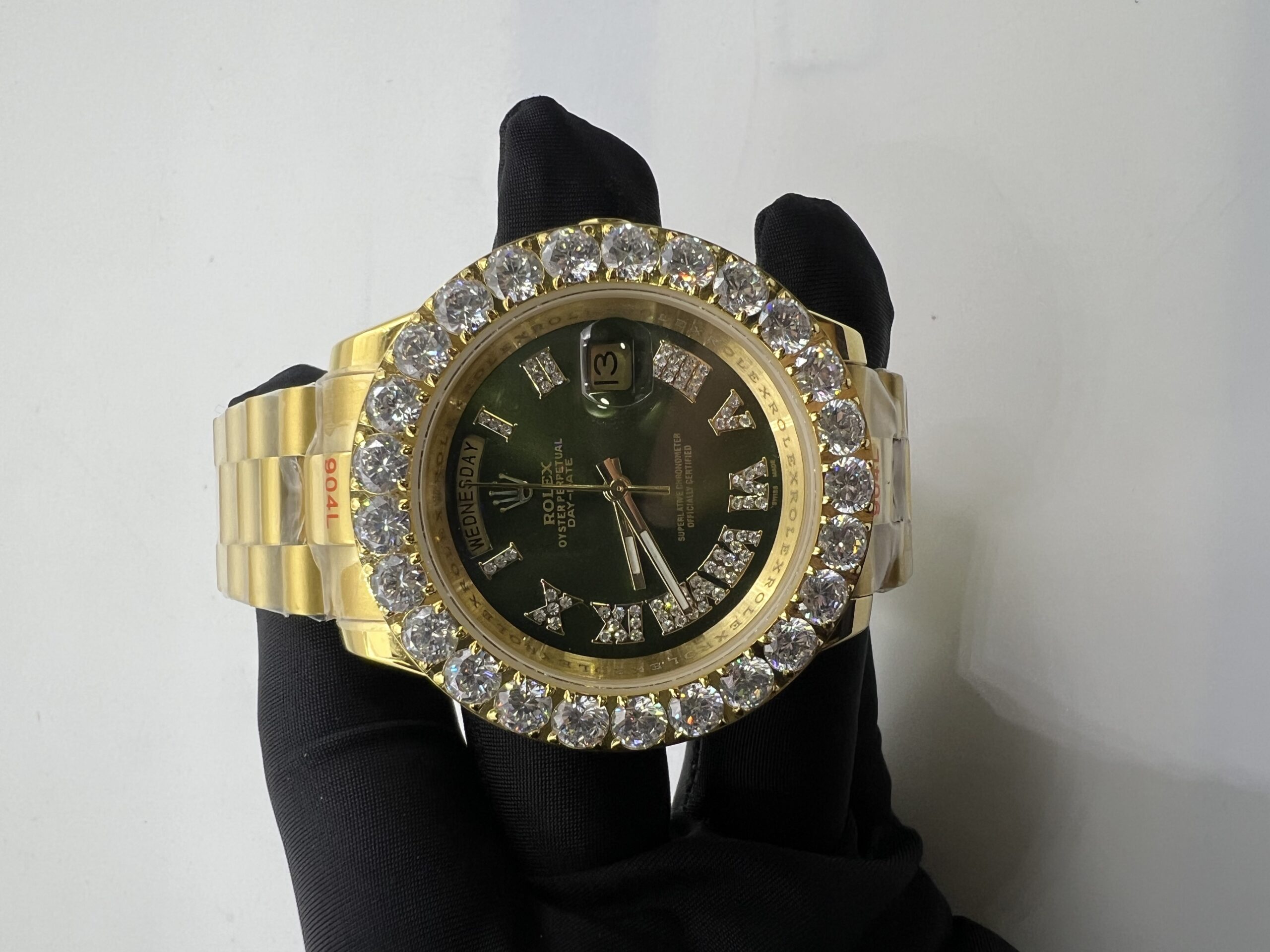
How Rolex’s Secret Ownership Gives It a 100-Year Advantage

luxury item

With its estimated market share of 30-32% of the Swiss luxury watch market, Rolex is not a publicly traded company chasing short-term gains. This unique structure is not a corporate quirk; it is the foundational secret to Rolex’s enduring quality, mystique, and market dominance. It frees the company to think not in financial quarters, but in decades, investing in a “slow refinement” approach that defines its identity.

Rolex operates four state-of-the-art manufacturing sites in Switzerland, with a fifth under construction. This vertical integration – from casting its own gold alloys to producing its own cerachrom ceramic bezels – is a colossal, long-term investment. It grants Rolex complete control over quality, supply chains, and innovation timelines, a feat only possible with patient capital.

In a bold 2025 strategic move, Rolex acquired Bucherer AG, one of its largest retail partners. This wasn’t merely an expansion; it was a decisive step toward controlling its entire ecosystem. By owning key retail points, Rolex can better manage the scarcity of its most coveted models (like the Daytona and Submariner), combat gray market sales, and ensure a perfect brand experience. Analysts note this is part of a broader strategy to reduce its authorized retailer network, tightening control over how its watches reach the market.

The proof of this model’s efficacy is undeniable. In 2024, Rolex’s turnover is reported to have surpassed 10 billion Swiss francs for the first time, growing approximately 11% in a challenging global economic climate. Consumers increasingly view replica Rolex not just as a luxury item, but as a stable asset, a perception the brand’s steadfast, unchanging strategy actively cultivates.

The Hans Wilsdorf Foundation has a dual mandate: to ensure Rolex’s permanence and to donate its income to charitable causes. It is recognized as a charitable trust in Switzerland, funding initiatives in culture, arts, science, sports, and environmental conservation in Geneva and beyond. This philanthropic arm completes the picture, allowing the wealth generated by the watches to serve society, further cementing the brand’s legacy.

Rolex’s lack of shareholders is its ultimate competitive advantage. It transforms the company from a business into a legacy institution. While competitors must navigate the demands of the stock market, Rolex answers only to its own exacting standards and a foundation dedicated to its century-long future. This is why a Rolex watch feels like a product of history, not just a product of industry. It is the physical result of a company empowered to take its time, forever.

Read More »
The Rolex Yacht-Master’s Journey to Modern Collector’s Choice

Rolex Yacht-Master 2026

Unlike its purely functional siblings, the Yacht-Master was conceived from the outset as a “professional” watch for life on deck, not underwater. This distinction is fundamental to its identity. Eschewing the unidirectional bezel of a diver’s tool, it features a polished, bidirectional rotating bezel, ideal for timing a regatta start or sailing intervals – tasks where elegance is as important as precision. Its initial presentation in solid 18k gold made a definitive statement: this was a watch where prestige and performance were equally paramount. This vision has endured, with the Yacht-Master consistently offering a more opulent aesthetic, characterized by polished center links, sunburst dials, and bezels crafted from precious metals or high-tech ceramics, setting it distinctly apart from the tool-watch ethos of the iconic Submariner.

The Yacht-Master line has demonstrated remarkable adaptability, expanding into a comprehensive family to suit diverse tastes and trends. Beyond the classic 40mm size, Rolex replica introduced a 37mm model for a more understated luxury and a bold 42mm version for a commanding contemporary presence. This flexibility in size is a key differentiator, offering a fit for more wrist sizes than many of Rolex’s other professional models. The collection has also become a showcase for Rolex’s material innovation. From the proprietary Rolesium (a blend of steel and platinum) to the sporty and durable Oysterflex bracelet, the line has pushed boundaries. A landmark moment arrived with the 2023 introduction of a Yacht-Master 42 crafted from RLX titanium, a material prized for its exceptional strength, lightness, and corrosion resistance, making it an ideal choice for a true sailing companion.

In the current collector’s landscape, the Yacht-Master represents a compelling proposition. Amid broader market corrections and rising retail prices across the luxury watch sector, the Yacht-Master’s blend of technical merit and accessible luxury garners significant attention. Recent models, particularly those utilizing novel materials like RLX titanium or featuring bold aesthetics, have sparked renewed interest, positioning the collection as a dynamic and evolving alternative within the Rolex catalog. For instance, the 2022 introduction of an 18k yellow gold Yacht-Master 42 added a classic, radiant option to the lineup, broadening its appeal. This continuous innovation ensures the Yacht-Master is not just a relic of the 1990s but a forward-looking series with a distinct character.

The refinement of the Yacht-Master is matched by the sophisticated mechanics within. Modern 40mm and 42mm models are powered by clone Rolex’s advanced Caliber 3235. This in-house movement features the high-efficiency Chronergy escapement and a Parachrom hairspring, offering superior resistance to shocks and magnetic fields while delivering a substantial 70-hour power reserve. The 37mm models are equipped with the equally impressive Caliber 2236, distinguished by its Syloxi hairspring. Every Yacht-Master undergoes rigorous testing to earn Rolex’s Superlative Chronometer certification, guaranteeing precision within -2/+2 seconds per day, a standard that transforms it from a mere accessory into a reliable instrument. This technical foundation justifies its place in the pantheon of Rolex’s professional watches.

Read More »
What Does It Cost to Service a Fake Rolex Datejust?

vintage Rolex Datejust

Owning a Rolex Datejust isn’t just about having a watch on your wrist – it’s about caring for a piece of precision history. Day in and day out, it keeps time through your everyday moments and milestones, quietly building up a need for professional attention. So it’s only natural to wonder: how much should I budget to keep it running perfectly?

While there’s no one-size-fits-all number, getting a clear picture of what goes into a service helps explain the cost. It’s not just a repair; it’s about preserving craftsmanship.

A standard service – often called a  “complete overhaul ” – is a detailed process. Official Rolex service centers usually start with a base price that includes taking the fake watch apart, deep-cleaning the case and bracelet, carefully servicing the movement (cleaning, re-lubricating, and regulating it), replacing all seals for water resistance, and running precision timing tests. Currently, for a Datejust, you can expect this core service to run somewhere between $600 and $1,200. That’s your starting point for making sure the watch stays accurate and reliable.

But the final cost often depends on your specific watch. The biggest variable is parts. If the watchmaker finds worn gears, a tired mainspring, or a scratched crystal during inspection, replacing these genuine Rolex components will add to the bill. And if you want the case and bracelet polished to remove scratches, that aesthetic refresh can cost several hundred dollars extra. Older or vintage Rolex Datejust models, or those with special dials, might also need more attentive care, which can influence the price.

So why is professional servicing such an investment? It really comes down to protecting your watch’s value and integrity. First, you’re guaranteed authentic replica Rolex parts, which ensure everything fits and works just as it should. Second, the work is done by certified watchmakers using specialized tools and lubricants you won’t find at a local repair shop. In short, you’re paying for expertise that maintains both the mechanical heart and the lasting worth of your watch.

A few tips can make the process smoother: industry advice suggests a full service every 5–10 years, depending on how often you wear it. A trustworthy service center will always give you a detailed estimate before starting any work. While independent watchmakers may charge less, for a watch like this, many owners prefer the assurance of an authorized service – which usually comes with a two-year warranty on the work done.

Read More »
What Rolex Should You Wear to Your Next Holiday Party?

best watch

This is a tough question because I don’t know you. I’m sure I’d like to. You like watches, I like watches – that’s a pretty good basis for friendship as far as I see it. But even though I don’t know you, I know a lot of people who want to know which Rolex they should strap on their wrist for their next holiday party. Maybe you do, too? And so, I’m going to try to help you out.

I’m breaking down my choices into two categories: personal and situational. Here are two of each, plus one bonus choice that encompasses both.

Personal: You’re a Baller and You Want Everyone to Know It

Bling, bling, baby. Okay, so you could go the diamond route, but if you’re just getting on the list now, you might be waiting a while. Instead, lean into the timeless power of gold. Everyone recognizes a gold Rolex replica. It remains the Western world’s most ubiquitous marker of success. With auction records for vintage Daytonas making headlines even in mainstream finance news, the gold Daytona has cemented its place in popular consciousness.

Situational: Your Partner Has Invited You to Spend the Holidays with Their In-Laws

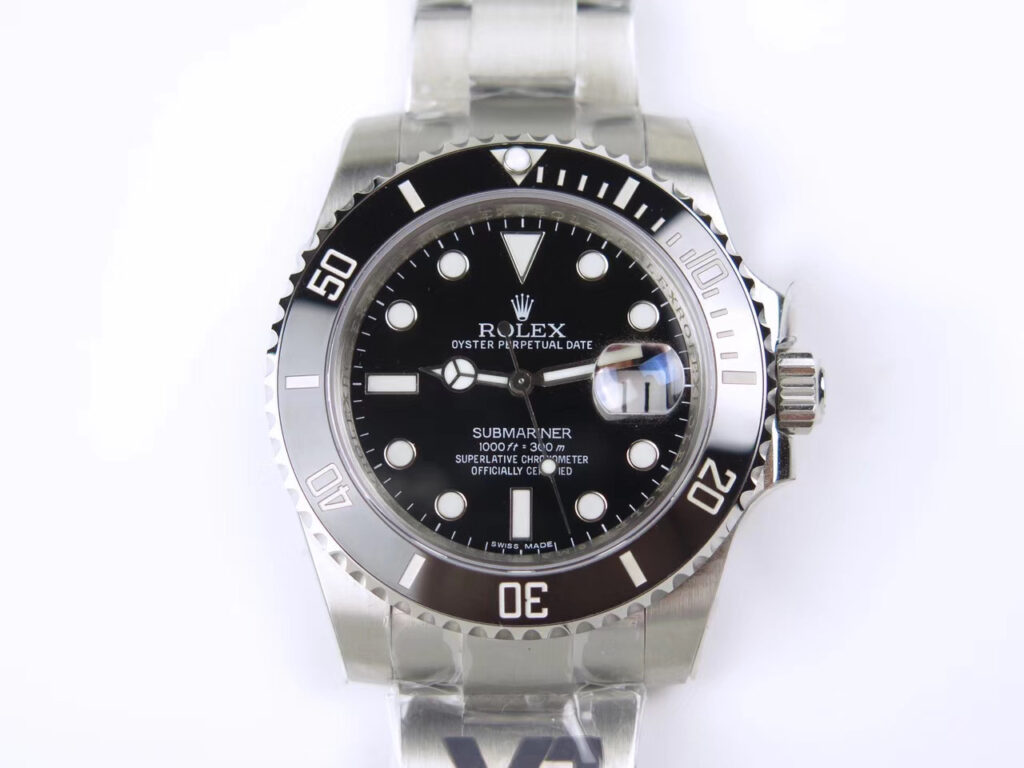
First impressions matter, but so does fitting in. You can’t possibly pass up the opportunity to finally buy that Rolex Submariner you’ve been itching to pull the trigger on for years, can you? The Sub is a universally respected classic. It’s recognizable enough to spark conversation ( “Is that a Submariner?”) but understated enough not to intimidate. It speaks of tradition, reliability, and good taste – qualities any family hopes to see.

It’s your entry ticket to chats with uncles and grandfathers, a subtle nod that you appreciate the finer, enduring things in life. The stainless steel Submariner Date in black is a flawless choice.

Personal: You Love Watches, But You Don’t Love Being the Center of Attention

Not every statement needs to be loud. For the connoisseur who wears a watch purely for personal pleasure, the Oyster Perpetual is your secret handshake with yourself. With its clean dial, polished bezel, and legendary build quality, it’s a masterclass in refinement. It deflects flashy attention while rewarding a closer look.

Opt for a 41mm Oyster Perpetual with a sun-ray finish in a deep blue or elegant green. It’s the watch you’ll glance at throughout the evening, smiling, knowing its perfection is your little secret.

Situational: Your Local Watch Club is Throwing a Party

Here it is. Finally. Your chance to geek out among those who speak your language. Sure, you could impress with the latest GMT-Master II  “Pepsi, ” or you could exercise true discernment and bring a piece of history.

Enter the vintage  “Double Red “ Sea-Dweller (Reference 1665). With its two lines of red text and beautifully aged lume, it’s a unicorn that true enthusiasts will spot across a crowded room. It says you’re not just a buyer; you’re a student of the craft. It’s the ultimate conversation starter for the only crowd that will truly appreciate it.

Bonus: You Are Santa Claus and Mrs. Claus Wants You Back in Time for Christmas

Let’s be practical. Santa has a global route, tight deadlines, and a spouse who expects him home for milk and cookies. If Mrs. Claus gifted him a watch to commemorate his most important night, what would it be?

The answer is obvious: the Rolex GMT-Master II  “Coke ” (Reference 16760, the  “Fat Lady “). With its jet-black and bold red bezel matching his suit, and a GMT function to track multiple time zones (Reykjavik, Nairobi, Shanghai…), it’s the perfect tool for the job. It’s rugged, functional, and has just the right festive flair. If Santa isn’t checking his  “Coke ” GMT before takeoff, I’ll eat my hat – bells and all.

Read More »